How Johnny O’Keefe Changed my Life
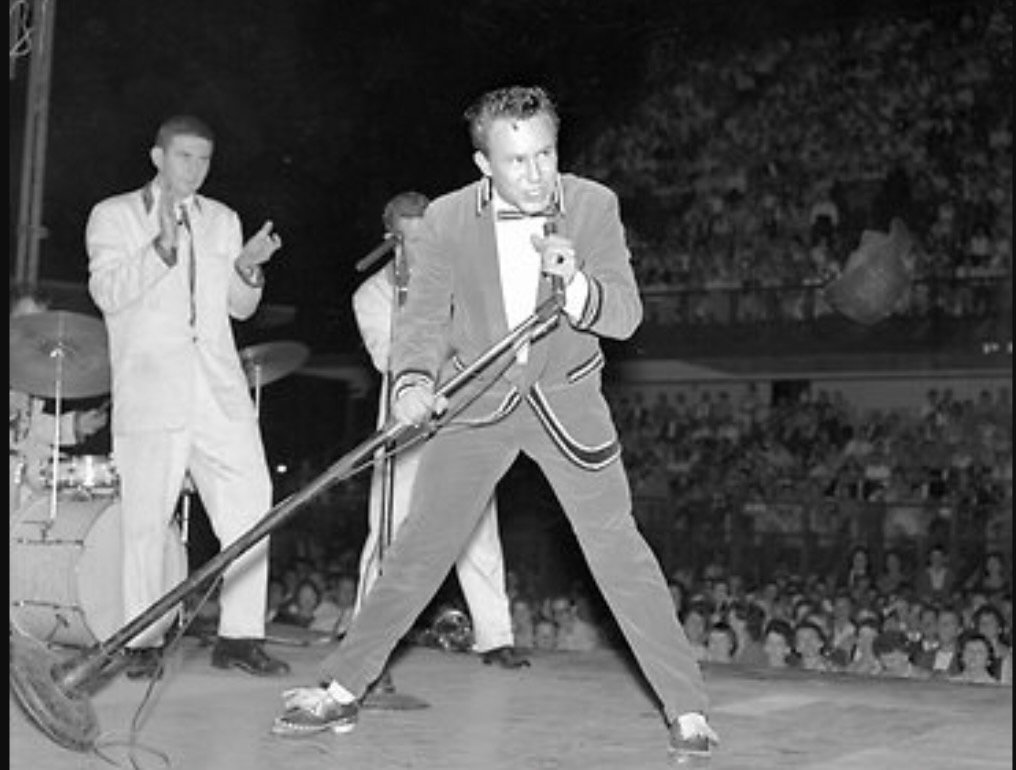
Johnny O'Keefe remains one of Australia's most influential entertainers.
His energy, charisma and determination helped define Australian rock n roll at a time when few believed local performers could compete internationally.
I remember watching him host Six O'Clock Rock when I was a kid and thinking, 'this bloke's as good as any of the Yanks.' Long before I ever stepped onto a stage myself, Johnny showed Australians that we didn't have to imitate overseas performers—we could be every bit as good.
Years later, when I decided to write a musical about his life, it wasn't simply because of the music. It was because I was fascinated by the man behind the legend. Success, pressure, resilience and vulnerability all combined to create a remarkable life that deserved thoughtful theatrical treatment.
Writing a musical biography is a balancing act. Historical accuracy has to work hand in hand with dramatic storytelling. I used Johnny's songs to punctuate the major moments of his life, while weaving in the evolving relationship between Johnny and Billy Thorpe—an old bull and young bull story that added another emotional layer to the production.
The deeper I researched, the more compelling Johnny became. Here was a man who pushed himself so relentlessly that he eventually suffered a breakdown and spent time in a psychiatric hospital in England. Like many performers, the applause that sustained him also demanded an enormous personal cost.
As I immersed myself in the project, I discovered I wasn't the only writer with the same idea. Sometimes ideas really are floating around in the ether.
When I arranged an interview with Lou Cash, Johnny's longtime guitarist, his first words were, 'Oh... another one.'
Cue alarm bells.
Still, I pressed on. I wanted the musical to open and close with Johnny's remarkable comeback performance at the 1972 Sunbury Festival. By then he was regarded by many as yesterday's man, while Billy Thorpe was king of the hill. It provided a wonderful dramatic frame for the story, and researching those events led to some unforgettable conversations with people who had been there.
One of the highlights was spending time with Billy Thorpe himself. He'd been one of my musical heroes, and we laughed together about the prospect of an actor playing him on stage.
'He'd better be a good-looking bloke,' Billy joked.
Those conversations alone made the project worthwhile.
Everything seemed to be falling into place. John Frost from the Gordon Frost Organisation had committed a modest budget to stage a reading. The Q Theatre in Penrith generously offered rehearsal space. I gathered actor friends, musician friends and colleagues from the industry, and we were ready to go.
Then, at the eleventh hour, Frosty pulled out.
He'd decided to back another writer's version.
It wasn't the direction I would have taken. Mine explored the darker, more complicated sides of Johnny's life, while the version that eventually reached the stage was lighter in tone. It proved to be very successful.
Frosty knows what he's doing.
At the time, though, I was devastated. Months of research, interviews and writing appeared to have come to nothing.
Looking back now, I couldn't have been more wrong.
Nothing is ever for nothing.
The journey itself became one of the richest creative experiences of my career. I met extraordinary people, spoke with heroes I'd admired for years and immersed myself in the life of one of Australia's true pioneers.
But, more importantly, I discovered something about myself.
Writing had become every bit as exciting as performing.
Until then I'd always thought of myself primarily as an actor. Somewhere during those months of research, interviews and rewrites, another door quietly opened. I found I loved uncovering stories, shaping real lives into theatre and searching for the emotional truth behind the headlines.
Today I realise that Say That You Love Me was my apprenticeship.
The musical itself never reached the stage.
But without writing it, many of the stories I've written since would probably never have existed.
Funny, isn't it?
Sometimes the projects that never happen are the very ones that change your life.